Our friend Tom Lynch managed several agencies and developed a few rules about them in the process, and his second rule was that mediocrity endures. This is annoying for any number of reasons, not the least of which is because it is true.
It is true about the work – clients will run a mediocre campaign much longer than a good one. It’s true about people – the great ones tend to leave or burn out, but the pallid drones squeeze out their product year after bloody year. And it is especially true about agencies themselves. The ratio of really interesting shops failing to mediocre ones that last longer than radium has got to be something like 20 to 1. Maybe more. Case in point, Mad Dogs and Englishmen.
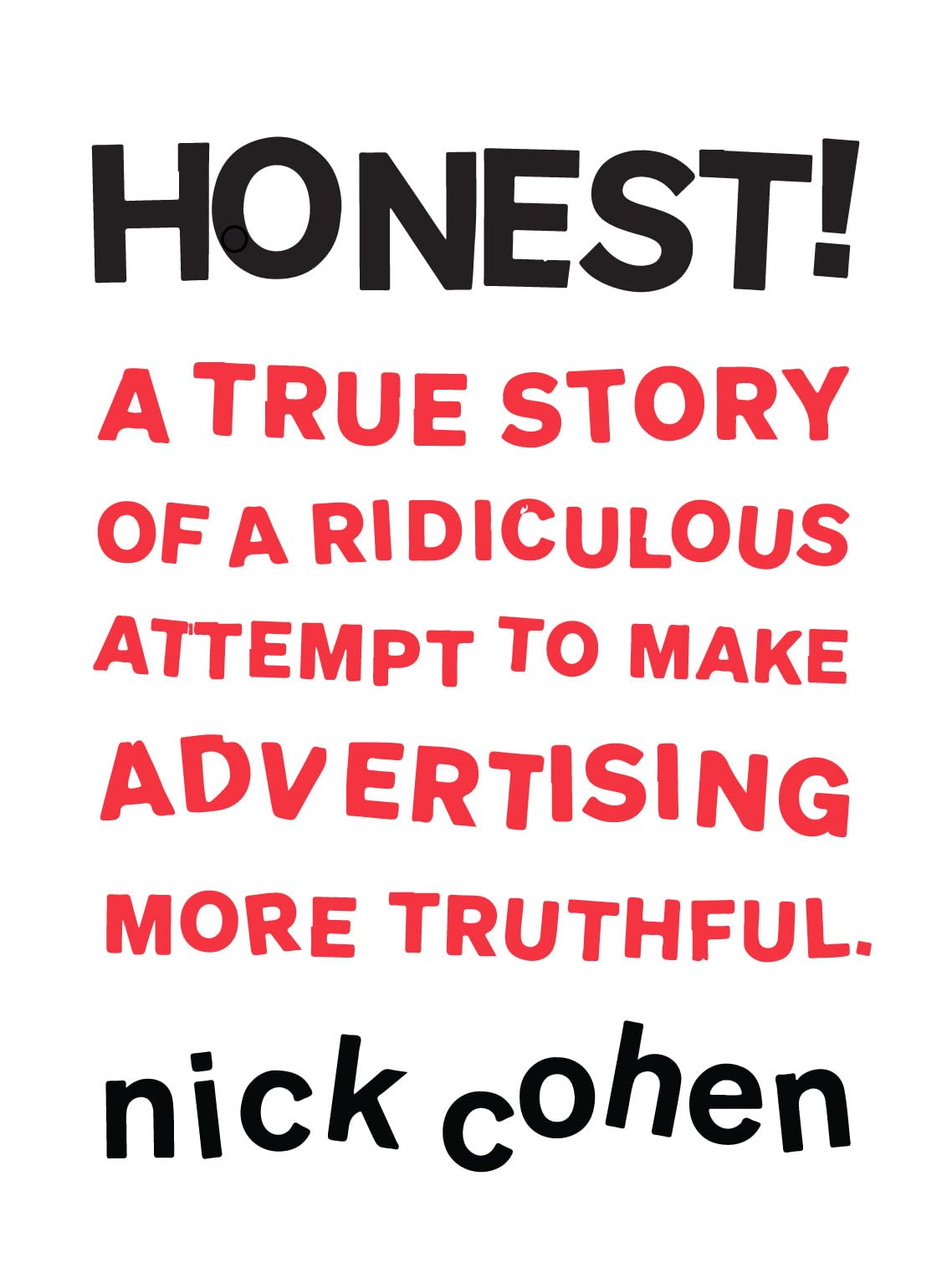
For those of you who blinked and missed it, or who were born too late to have enjoyed them, Mad Dogs and Englishman was an advertising agency of the first order. That is, of the “really interesting shops” order. It was founded in 1991 by Nick Cohen and Robin Hafitz in New York and did frankly brilliant work (we’ll get to that in a second) for the Village Voice, TVLand, Yoo-Hoo, Thom McAn, MovieFone and others before shuttering its offices in 2005. Honest is at once a tribute to that 14 year run, a portfolio of its work, and a bit of an explanation about just what exactly they were trying to do and why it was so god-damned important.
Now, we’ve reviewed quite a few books of this type here. Kevin Roberts’ Lovemarks comes to mind. Tutssel & Bernardin’s Humankind does too. Books that explore the unique genius of their agency (in these cases, Saatchi and Saatchi and Leo Burnett), complete with glittering examples of that genius working for clients and winning awards. These books are ostensibly “think pieces” – and indeed they do provide compelling insight about the business (as our reviews here and here demonstrate) – but they are also, it must be said, new business endeavors, promotional pieces that are dedicated to generating attention among the industry press and maybe the public at large, but most importantly, with the C-suites of large-spending potential clients. (As most famously, Lovemarks did when JC Penney cited Roberts’ book as the reason they awarded Saatchi their business).
But that can’t be what Cohen is trying to do with Honest because his agency doesn’t exist anymore. Sure, sure, Cohen is still a vital member of the ad community on his own, contributing valuable work to Wieden + Kennedy, Goodby Silverstein, Chiat\Day and others. But if Honest is nothing more than a glorified puff piece for Nick Cohen, is it worth it?
Fortunately it’s not.
(That is, not just a puff piece for Nick Cohen. Sorry, was that not clear?)
Despite it being, in many ways, a relic of its time, the things Cohen learned about advertising, and tried to promote, are still valuable. Indeed, perhaps they’ve never been more valuable. Like the fundamental idea of “honesty” – which, isn’t so much about not lying to your customers (although yeah, don’t do that), as it is about looking at the product and the ad from the customer’s point of view in order to make work that has some meaning and value to her.
Which you can see in what Mad Dogs did. From the Village Voice subscription ads that featured a Gossage-amount of copy, mixed with a sort of Basil Fawlty level of fury about the very notion of having the magazine delivered to your door; to the ads for The Creative Register that enumerated all the ways one could kill oneself; to our particular favorite (because we recall seeing them plastered all over the New York City subways in the 90s and wishing we’d done them ourselves) the ads for “Frankenstein: the Musical” that featured brains in lab jars, with the jar labeled “Ethel Mermen” disturbingly bereft of any grey matter. (you can see these and more at Dave Dye’s terrific site here)
All “honest” because they are providing value to the public – often in the form of humour – while being direct about what was being advertised. Which was as refreshing to the general public, as it was an epiphany to MD&E’s employees. As “Mad Dog Employee #10” (yes, they are all enumerated in the book) Jon Soto relates (echoing for his generation, Bob Levenson’s similar advice about writing ads):
“Once I learned how to make my work speak with clear compassion and empathy and to not brag, everything just sort of fell into place for me because it’s the way I speak to people normally. I’m pretty much this affable super-enthusiastic stoner with tons of energy who loves to make his friends laugh and tell them about cool stuff I’ve found or heard. I just had this perception of what advertising was supposed to be and how it was supposed to behave and I was very wrong. It was a revelation.”
But what is ultimately disturbing about Honest is that despite the success of the work, despite its increasing notoriety (for its clients, for itself), despite the fact that it was actually working, it appears that companies only wanted to be “honest” when they had to. Again and again, Cohen tells the tale of clients teetering on the edge of bankruptcy, who were so desperate for success that they’d try anything – even being “honest”.
But why? Especially when, as we explained earlier, Cohen’s “honesty” wasn’t about ripping the covers back on the client’s deepest darkest secrets. It was “honest” as in an “honest day’s work”. It was work that gave value. That, as Cohen writes “[made] people laugh with realization, and say, ‘Yes, that’s it! Thank you for understanding me and my world so well!” Why should that be so revolutionary – in the 1990s? And why should it still be so shocking today?
Perhaps because then, as now, people don’t really think advertising works. That it can actually break through life’s petty pace to make people laugh, or nod, or god forbid, actually care. And because they don’t, they don’t even try – content to simply show up in the places that the analytics have told them their “targets” are, and let the chips fall where they may.
The fact that for a time in New York City people tried to do something more, something better, and that Nick Cohen has documented that attempt here, is reason to be inspired. Because it reminds you it’s possible.
And something else as well.
That while mediocrity may endure, it is human connection that makes life bearable.
Honest.
Honest: A True Story of a Ridiculous Attempt to Make Advertising More Truthful by Nick Cohen was published by Tish Tosh on 04/01/2024 – order it from Amazon here or pick it up at your local bookseller (find one here).
Please be advised that The Agency Review is an Amazon Associate and as such earns a commission from qualifying purchases
You May Also Want to Read:

 The Agency Review