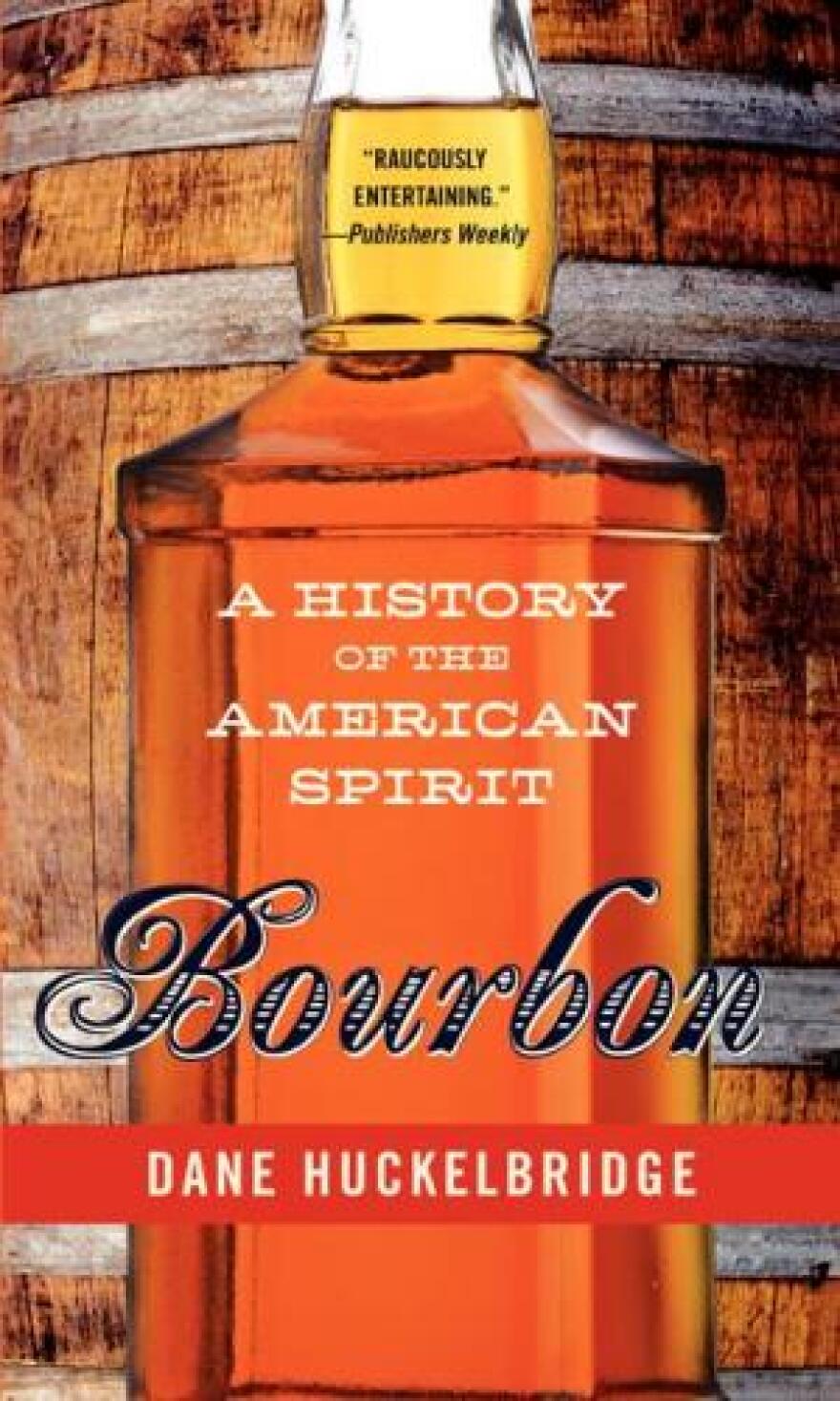
One could use the wordplay in Dane Huckelbridge’s subtitle as an excuse to dismiss the whole book. “’American Spirit’ = native-made alcohol. ‘American Spirit’ = what makes America, America. Our ‘raison d’etre’. Our ‘essence’. It’s a pun. Ugh.”
But let’s not. Let’s go straight at it. Let’s talk about what makes America, America.
Of course, this may seem like a bad time for it – though even the most cursory review of our history will reveal that, in the moment, there’s never a good time to talk about it. At least not in a serious way. Because, in the moment there’s always a crisis of confidence, of purpose, of identity. It is only in retrospect, when the editing and revising create a narrative that aligns with a personal bias, that we are able to evoke the nostalgia for a simpler, better time that we fool ourselves we were aware of at the time.
The problem lies in that editing and revising, where inconvenient truths are excised because they reveal a side of ourselves we don’t wish to advertise. Which is why my resume doesn’t include a list of my speeding tickets, and why my Linkedin profile picture is not of me throwing up in the bathroom of my college dorm.
Except America is not a person, it’s a bunch of people, and when we excise and revise we don’t just cut out a bad haircut or an unfortunate sartorial experiment – we cut out people. And often, we cut out ourselves.
Alcohol is one of the things that often gets removed from our history. From drunk driving to alcoholism to its use to lubricate the theft of this land from the natives – to all of the social ills that Prohibition and the Temperance Movement rode to power in the last century trumpeting, alcohol is shunted aside in most histories, at best referred to as merely “cultural”, as just a form of “entertainment” but never actually central to the cut and thrust of “real” history.
But alcohol is real history. Sometimes it reflects the “bigger stories” in ways that illuminate them, like for example, how staggeringly rapid the growth of American cities was in the early years of the republic:
“In 1812, the residents of [New Orleans] … received 11,000 gallons of imported whiskey; by 1816, that number had increased to 320,000 gallons, and by 1824, it stood at a whopping 570,000 gallons.”
[For context, the population of New Orleans in 1810 was just over 17,000. In 1830 it was 46,000. That’s almost tripling, which is impressive. The increase in alcohol during those years was more than 50 times – which is of course, mind-boggling. Laissez les bontemps rouler, indeed.]
Sometimes it does more than illuminate, revealing aspects of a story you thought you knew. For example, about the places where that alcohol was served in those rapidly expanding cities:
“To understand how alcohol figures into the country’s changing cityscape, it is crucial to examine the establishment in which it was served: the urban saloon. Found generally in poor neighborhoods that could claim few meaningful social clubs, news agencies, sporting complexes or political offices, the local saloon provided all of these multifarious services to the immigrant underclass.”
That is, if you were an immigrant coming to America, you went to the saloon in the section of town your people lived in, and there you found your language and someone who could find you a place to live, and likely a job, and thus your new life. Often you got paid there, got your mail there, met your priest there, met your politicians there. Biergartens for the Germans. Pubs for the Irish. Osterias for the Italians. They weren’t just booze-halls, they were central hubs of bourgeoning ethnic communities. Which puts an entirely different tint on why the lily-white Prohibitionists worked so hard to put them out of business, doesn’t it?
Of course, they didn’t put them out of business (though they did cost the federal government upwards of $11 billion during Prohibition, Mr. Huckelbridge reports), and soon alcohol evolved from simple hooch to a badge that represented qualities of the narrative we wished to tell ourselves. Which we told ourselves through advertising:
“In 1952, … bourbon, accounted for exactly $132,597 in magazine ad sales and $850,259 in newspaper ad sales. By 1961, … those numbers had leaped remarkably to $4,029,197 and $4,096,921, for magazines and newspapers respectively.”
[That’s a little over 5x increase in newspaper sales and roughly 40x in magazines, if you’re keeping score]
It is with data like this that Mr. Huckelbridge shows how interwoven the story of alcohol is with the story of America. And while he doesn’t restrict himself purely to bourbon to do so, that’s fine because for much of this country’s history bourbon was the dominant spirit, so anything that was true for alcohol was true for bourbon. And so we see how alcohol – and in most cases, bourbon – wasn’t some sideshow aspect of American, life, it was a central part of it. As much a part of what makes America America as the Rockies are, as Thelonious Monk is, as Slavery, Joan Didion, the Trail of Tears, Mark Rothko, Salem, the Reserve Clause, immigration, Stonewall.
And the lesson here is that you don’t have to like all of what makes America, America. Indeed, the more you learn, the more you’ll likely discover things that you don’t. And by the same token, you don’t have to partake of all of it either. But just because you don’t drink doesn’t mean alcohol isn’t a part of the story. I don’t rope cattle, or work on an assembly line, or farm wheat – but it would be idiotic to argue that therefore those things aren’t parts of what makes America, America.
The problem is, we pretend it isn’t idiotic. We pretend that America is as small as one person’s limited view of it when in fact Whitman, Melville, Emerson, Thoreau got it right when they wrote about the vast overwhelming mind-boggling bigness of this place.
Billy Bragg once sang that “those who own the papers also own this land.” Perhaps today we should say that those who control the narrative do. And just exactly who controls that narrative is where the true battle of American history is fought. Mr. Huckelbridge’s book – whether he meant to or not – in a small way, wrests part of the narrative back from those who would leave alcohol out.
For as Whitman told us, we contain multitudes.
We expect Mr. Huckelbridge would drink to that.
Bourbon: A History of the American Spirit by Dane Huckelbridge was published by William Morrow on 04/01/2014 – order it from Amazon here, or Barnes & Noble here, or pick it up at your local bookseller (find one here).
Please be advised that The Agency Review is an Amazon Associate and as such earns a commission from qualifying purchases
You May Also Want to Read:


 The Agency Review